

What Makes a Small Business Web Designer Different from a Big Agency?

Updated: Mar 14
And why 30 years in corporate taught me that small businesses deserve better
What makes a small business web designer different from a big agency?
A small business web designer works differently from a big agency because the relationship is direct, the strategy is personal, and the work is built around your specific business - not a template. You talk to the person who actually designs your site. They learn your goals, your customers, your voice. There is no account manager translating your brief to a team you never meet. The best small business web designers bring strategic thinking alongside creative skill - they help you get clear on what your website needs to do before a single page is designed.
That clarity is the difference between a website that looks good and one that actually works.
So how did a corporate marketer end up here?
If you had told me ten years ago that I would be running a small web design studio based in Hull, working with small businesses right across the UK - tradespeople, therapists, independent shops, service providers - I would have laughed. I was deep in corporate life - strategy documents, stakeholder meetings, agency briefs and boardroom presentations.
But that corporate life taught me something that changed everything I do now. And it is the reason I work the way I do as a small business web designer today.
So let me tell you what happened. Not because my story is remarkable - but because the lessons in it are the ones I bring to every project.
What corporate marketing taught me about websites
I spent over 30 years working across marketing, strategy, design, customer experience and business development. Big organisations, small organisations. Local, UK-wide, Global.... you can fit a lot into that time. Proper budgets. Agencies of every flavour - the brilliant, the mediocre and the genuinely baffling.
I became the person who mapped the roadmap, built the campaign, designed the creative and then rolled up my sleeves to deliver it. People relied on me because I got things done. On time. Properly. To target.
But here is what I noticed, again and again: the bigger the agency, the further the work drifted from the actual business it was supposed to serve. Briefs got diluted through layers of account managers. Strategy became a buzzword rather than a discipline. And the people whose money was paying for it all - the business owners - were often the least heard voices in the room. And let’s not even start on the price tags!
That bothered me. It still does.
Why I stopped climbing and started building
I was not built for empire-building. I was not chasing titles or corner offices. I was happiest when I was creating something meaningful - making a business clearer, helping a team communicate better, solving a problem that had been sitting there for months.
Then redundancy arrived. More than once, actually. Being told you are "too experienced" or that you "don't fit anymore" when you have spent decades delivering results is a particular kind of bruising. It knocks the wind out of you.
But here is the part I did not expect: it became the turning point.
I realised I did not need anyone's permission to do great work. I did not need another corporate badge to prove my worth. And I definitely did not need to shrink myself to suit environments that no longer suited me.
So I backed myself. Fully. Built something of my own and earned from day one.
Why small businesses, specifically
Because small businesses are where every decision actually matters.
In a large organisation, a website project can absorb months of committee meetings and still launch without anyone quite knowing what it is supposed to do. In a small business, the website is the shopfront, the sales team, the first impression and the credibility check - all at once. There is no room for vague. It has to work.
That is the kind of work I love. The kind where clarity is not optional - it is the whole point.
A plumber in Yorkshire needs a website that explains what they do, where they cover and how to book - clearly enough that someone with a leaking pipe at 9pm can act on it immediately. A therapist in the Midlands needs a site that feels calm, professional and trustworthy before a visitor has even read a full sentence. An independent retailer in the south west needs their products to look as good online as they do on the shelf, with a journey that makes buying feel easy.
These are not small problems. They are precise ones. And they deserve precise thinking.
How a small business web designer actually works differently
When you work with a big agency, you typically get a polished pitch, a project manager, and a team of specialists who each handle their piece. The designer designs. The developer develops. The copywriter writes. And somewhere in the middle, the thread of your actual business can often get lost (and please don’t think I’m putting all agencies down, that’s not the intent here. I’ve just reflected on my own experience and found the agencies I have personally dealt with - wanting).
When you work with a small business web designer - a good one - you get a single person who holds the whole picture. Someone who understands strategy, design, content and structure, and how they all connect. Someone who asks the questions that matter before anything gets built.
Questions like: who is this website actually for? What do those people need to understand? Why should they trust you? And what do you want them to do next?
That is the work I do. Every project starts with a discovery conversation - not a template, not a questionnaire, not a "pick your colour palette" form. A proper conversation about what your business needs its website to do. Everything else follows from that.
Think of it this way: a big agency sells you a process. A good small business web designer gives you their brain.

Where AI fits into this
When generative AI arrived, it felt like meeting the business partner my brain had been waiting for. Fast, curious, collaborative - a tool that could keep up with the pace of ideas I have always had but never had enough hours to fully explore.
I use AI to amplify my expertise, not replace it. It helps me research faster, test ideas quicker and produce content that is sharper and more considered. But the strategy, the thinking, the understanding of your business - that is human. That is 30 years of pattern recognition, instinct and experience that no tool can replicate.
I mention this because it matters. The web design industry is changing fast, and small businesses deserve a designer who is not just keeping up but thinking ahead on their behalf (especially to harness all this wonderful tech).
What clients actually say
I am often told things like: "You just get it." "You understand my business quicker than I can explain it." "You go beyond the website - you make the whole business clearer."
That is not a sales pitch. It is what happens when someone with decades of strategic experience sits down and actually listens to a small business owner talk about what they do and who they help.
I do not build websites for the sake of building websites. I build tools that help small businesses show up with clarity, attract the right people and feel confident about their online presence. That is the difference between a website that exists and one that works.
Why Kingstown Web Studio works this way
I am not building an empire. I am not chasing scale. I do not want a team of 30 or a client list of hundreds.
I am happiest right here - a small business, helping small businesses, making a real difference one website at a time. Every project gets my full attention, my strategic brain, my creativity, my honesty and my slightly cheeky personality.
This is my happy place. And every twist and turn of the last 30 years was leading to it.
Try this
Open your website right now and ask yourself - could a stranger landing here for the first time understand what I do, who it is for, and what to do next within five seconds? If the answer is no, that is not a design problem. It is a clarity problem. And that is exactly the kind of thing a discovery conversation sorts out.
What happens next
If any of this resonated - the frustration with agencies that do not listen, the desire for a website that actually reflects your business, the need for someone who gets small business reality - then you are in the right place.
You will find more of this kind of thinking across Web Wise - honest, practical writing about websites, visibility and smarter online decisions for small businesses. No noise, no junk - just useful perspective when there is something worth sharing.
Subscribe to Web Wise
If you would like to follow along, you are very welcome.

TL;DR
What is TL;DR?
It means “Too Long; Didn’t Read” - a quick summary for fast scanning and voice assistants like Alexa or Siri that surface the short version first.
A small business web designer differs from a big agency because you get direct access to the person doing the strategic thinking, the design and the build - not a chain of account managers. After 30+ years in corporate marketing, I started Kingstown Web Studio because small businesses deserve the same quality of strategic insight that large organisations take for granted, delivered by someone who actually listens. Every project starts with a discovery conversation focused on clarity - who your website is for, what those people need to understand, and what happens next. The result is a website that works as a business tool, not just a digital brochure
Blog FAQs
What is the difference between a small business web designer and a web design agency?
A small business web designer typically handles strategy, design and build as one person - so nothing gets lost in translation. An agency splits those roles across a team, which can mean your brief gets diluted before it reaches the person doing the work.
Why does Kingstown Web Studio focus on small businesses?
Because small business websites leave no room for vague. Every page has to earn its place. That precision is what makes the work interesting and the results meaningful.
What is a discovery conversation and why does it matter?
It is a structured conversation before any design happens, focused on understanding your business, your customers and what your website needs to achieve. It is the step most people skip - and the one that makes the biggest difference.
How does your corporate background help small business clients?
It gave me decades of experience in strategy, communication and customer experience. Small businesses get that same level of thinking, applied to their scale and their reality - without the agency price tag or the corporate waffle.
Do you use AI in your web design process?
Yes - as a tool to amplify expertise, not replace it. AI helps with research, content refinement and testing ideas faster. The strategy, the understanding of your business and the creative direction are entirely human.
Who is this blog for?
Anyone choosing between a big agency and an independent web designer for their small business. And anyone curious about the person behind Kingstown Web Studio.
Glossary
Clarity-led web design
An approach where the thinking - who the site is for, what it needs to say, what action it should drive - comes before any visual design. Clarity leads. Design expresses. Development delivers.
Discovery conversation
A structured session before design begins where the designer and business owner work through goals, audience, messaging and structure together. The foundation of every Kingstown Web Studio project.
Small business web designer
A web designer who specialises in working with small businesses - typically handling strategy, design, content and build as one person rather than splitting the work across a team.
The 5Ws
The five questions that shape every website project at KWS: Who is it for? What do they need? Why should they trust you? How are you best placed to help? What happens next?
Website as a business tool
The idea that a website should actively support business goals - generating enquiries, building trust, guiding decisions - rather than simply existing as a digital presence.

About the Writer
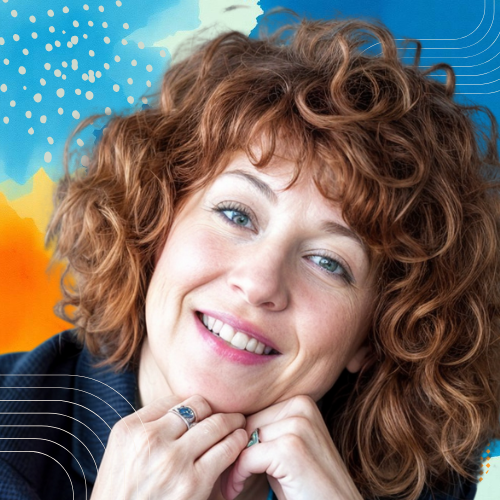
Susi is the creative brain behind Web Wise and the small business web designer at Kingstown Web Studio. A career spanning corporate, consultancy, and running her own businesses means she writes from experience - not theory. Her blogs are practical, honest and a little bit cheeky: the kind she wishes someone had given her earlier. When she's not building websites, she's sharing the ideas, insights and lightbulb moments that help small businesses show up with confidence.


.jpg)


%20(1).png)

.jpg)
.png)
Comments